.jpg)
پژوهشگران مرکز تحقیقات بهداشت باروری ولیعصر(عج) دانشگاه علوم پزشکی تهران بررسی کردند
ارتباط شاخص توده بدنی با لرز حین و پس از سزارین تحت بیحسی نخاعی؛ BMI بالاتر با شیوع و شدت کمتر لرز همراه بود
نتایج یک مطالعه آیندهنگر در مرکز تحقیقات بهداشت باروری ولیعصر(عج) دانشگاه علوم پزشکی تهران نشان داد که در زنان باردار تحت سزارین انتخابی با بیحسی نخاعی، شاخص توده بدنی بالاتر در سهماهه سوم بارداری با کاهش قابلتوجه بروز و شدت لرز پس از بیحسی همراه است؛ بهگونهای که زنان دارای BMI طبیعی، بهویژه از ۳۰ دقیقه پس از بیحسی، لرز شدید و عوارض مرتبط بیشتری را تجربه کردند.
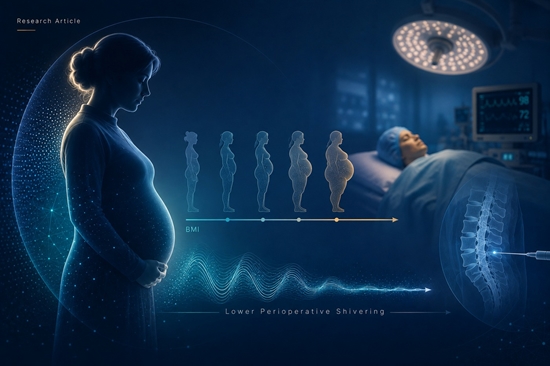
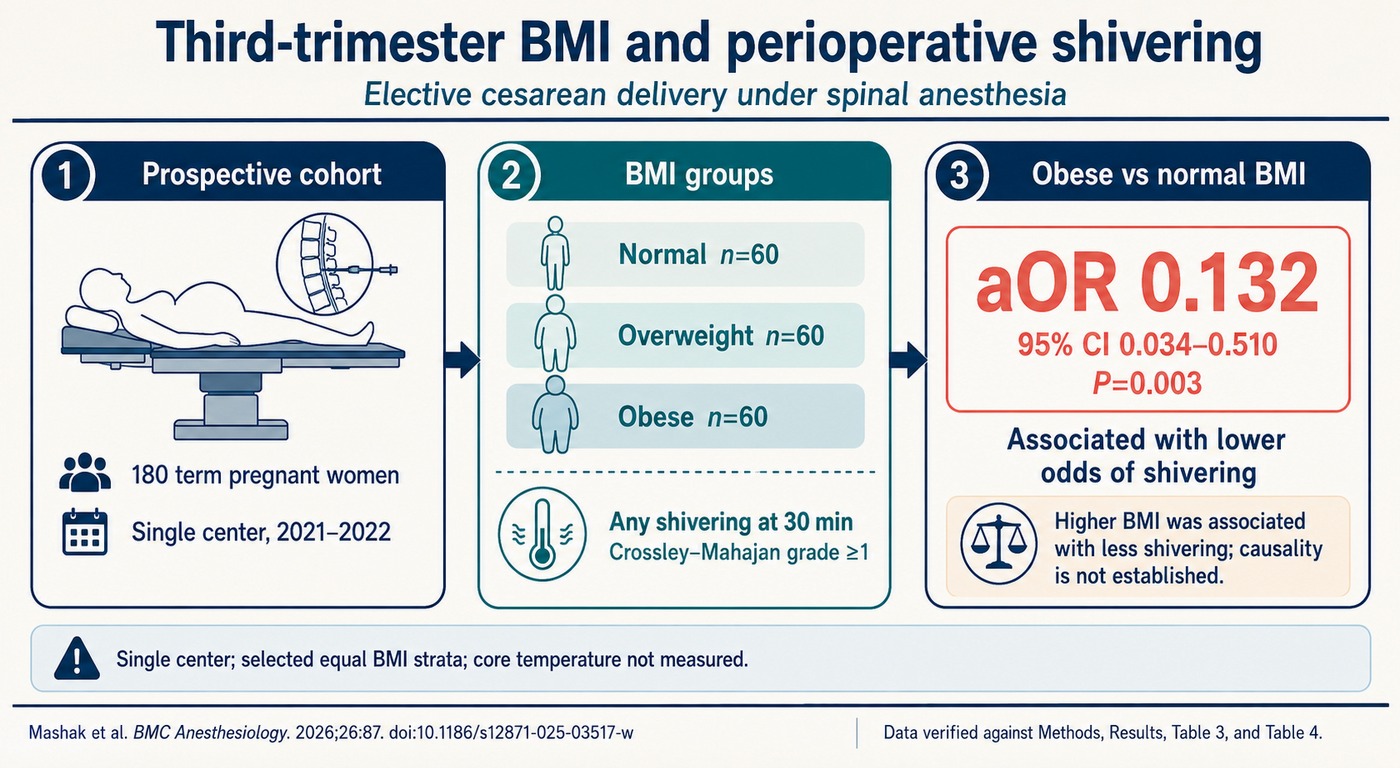
This prospective observational study investigated the association between third-trimester body mass index (BMI) and perioperative shivering among 180 women undergoing elective cesarean delivery under spinal anesthesia.
Perioperative shivering (POS) is a common complication of spinal anesthesia (SA) during cesarean section (C/S), with incidence rates ranging from 36% to 85%. This study explored the association between third-trimester body mass index (BMI) and POS in women undergoing elective C/S under SA.
In this prospective cohort study, 180 pregnant women scheduled for elective C/S were categorized into three BMI groups: normal (18.5–24.9 kg/m²), overweight (25–29.9 kg/m²), and obese (≥30 kg/m²). Shivering severity, complications, and treatment needs were assessed every 15 minutes for two hours following spinal anesthesia.
Participants had a mean age of 28.6 ± 5.8 years. Higher BMI was significantly associated with reduced shivering incidence from 30 minutes onward across multiple time points. At 30 minutes after spinal anesthesia, obese and overweight women exhibited lower shivering rates than those with normal BMI. After 60 minutes, severe shivering occurred in more than 55% of normal-BMI women compared with 15.8% of obese women. Complications were also less frequent in obese and overweight groups, while adjusted odds ratios confirmed a protective association of higher BMI, particularly beyond 30 minutes post-intervention.
Elevated third-trimester BMI was associated with reduced perioperative shivering incidence, severity, and complications, suggesting a potentially protective role. Clinicians should prioritize shivering prevention strategies for women with normal BMI during cesarean delivery.
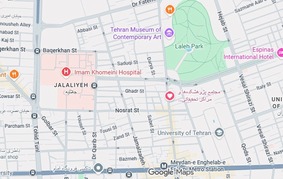
Vali-e-Asr Reproductive Health Research Center, Family Health Research Institute, Imam Khomeini Hospital Complex, Tehran University of Medical Sciences, Tehran, Iran

ارسال نظر